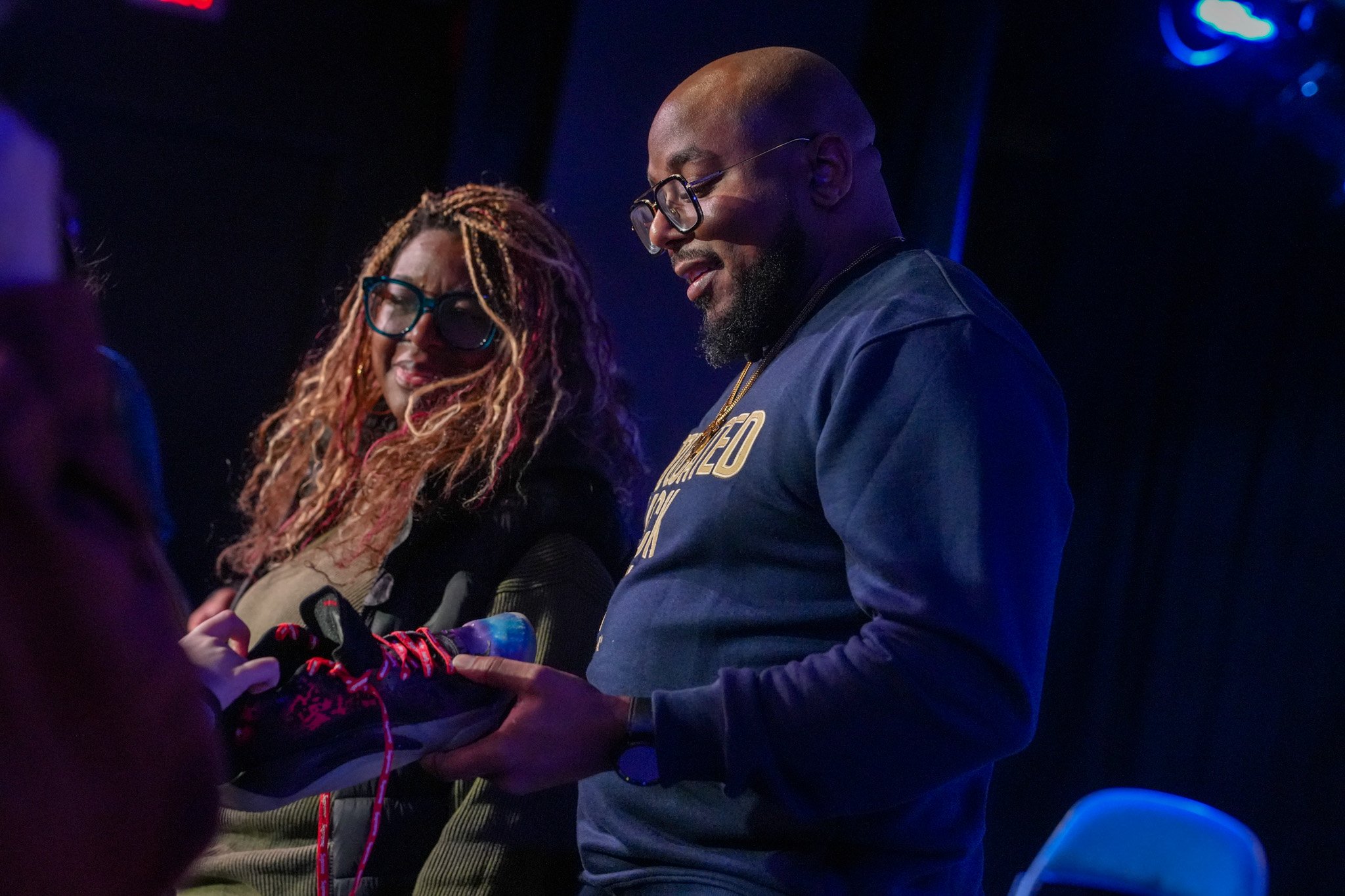


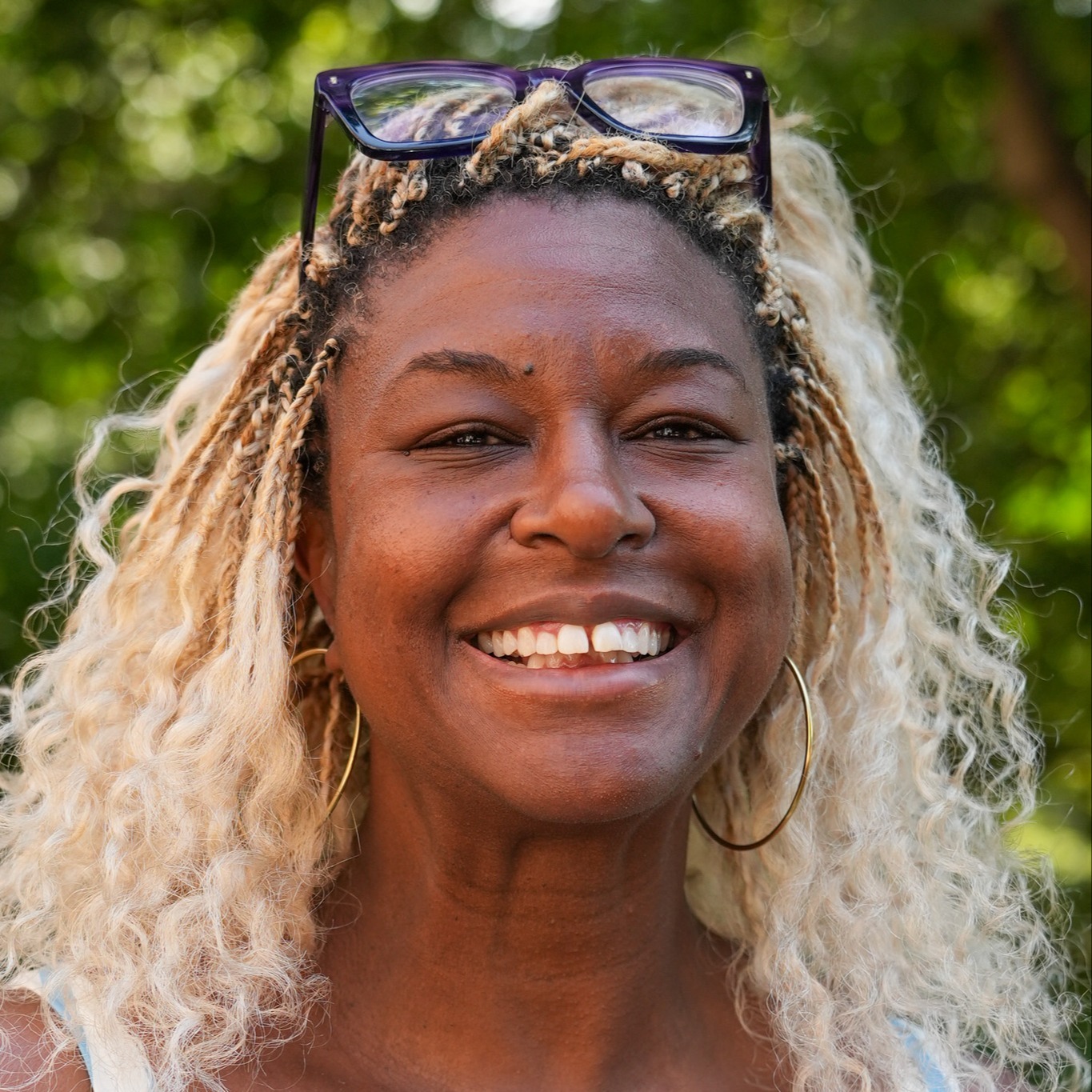
As we close out Black History Month, CH-CH welcomed the opportunity to experience history in a new and exciting way. Craft Sutton, historian, researcher, cultural enthusiast, and passionate storyteller, visited our campus to explore the powerful intersection of sneakers, culture, identity, and history.
From the moment he said, “Good morning,” it was clear this wouldn’t be a traditional lecture. Craft invited us into conversation immediately, asking, “Are there any sneakerheads in the building?” Hands went up. What followed was a dynamic, student-centered exploration of how something as everyday as a pair of sneakers holds generations of meaning.
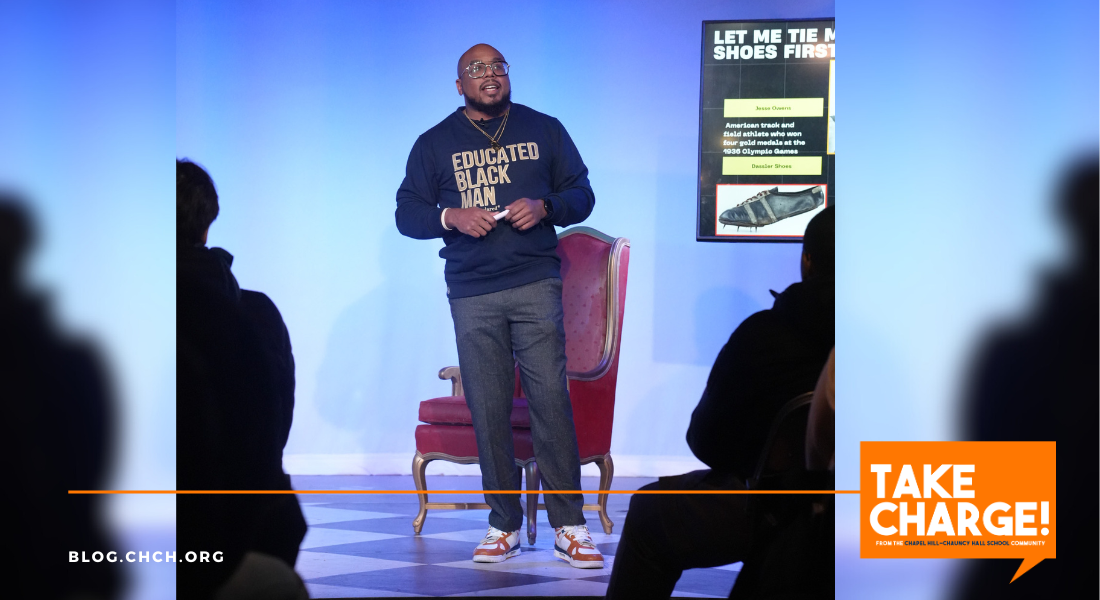
Grounding us in the global history of rubber production in the Congo under King Leopold II, Craft challenged us to think about where materials come from, and at what human cost. It reminds us that history is layered, complex, and often uncomfortable. From there, we traveled through time, tracing the journey from Jesse Owens and the rise of Converse and Chuck Taylor to the Civil Rights Movement, Olympic protests, hip-hop culture, and today’s global sneaker brands.
Discussing young activists of the Civil Rights Movement who marched in Converse, Craft explained that these shoes were more than practical attire; they were part of a visual statement. As he shared, young people wore them as their “badge of honor,” a uniform for protest, movement, and change. Sneakers became more than footwear. They became symbols, and we were able to understand where that impact began and what that impact looked like then and now.
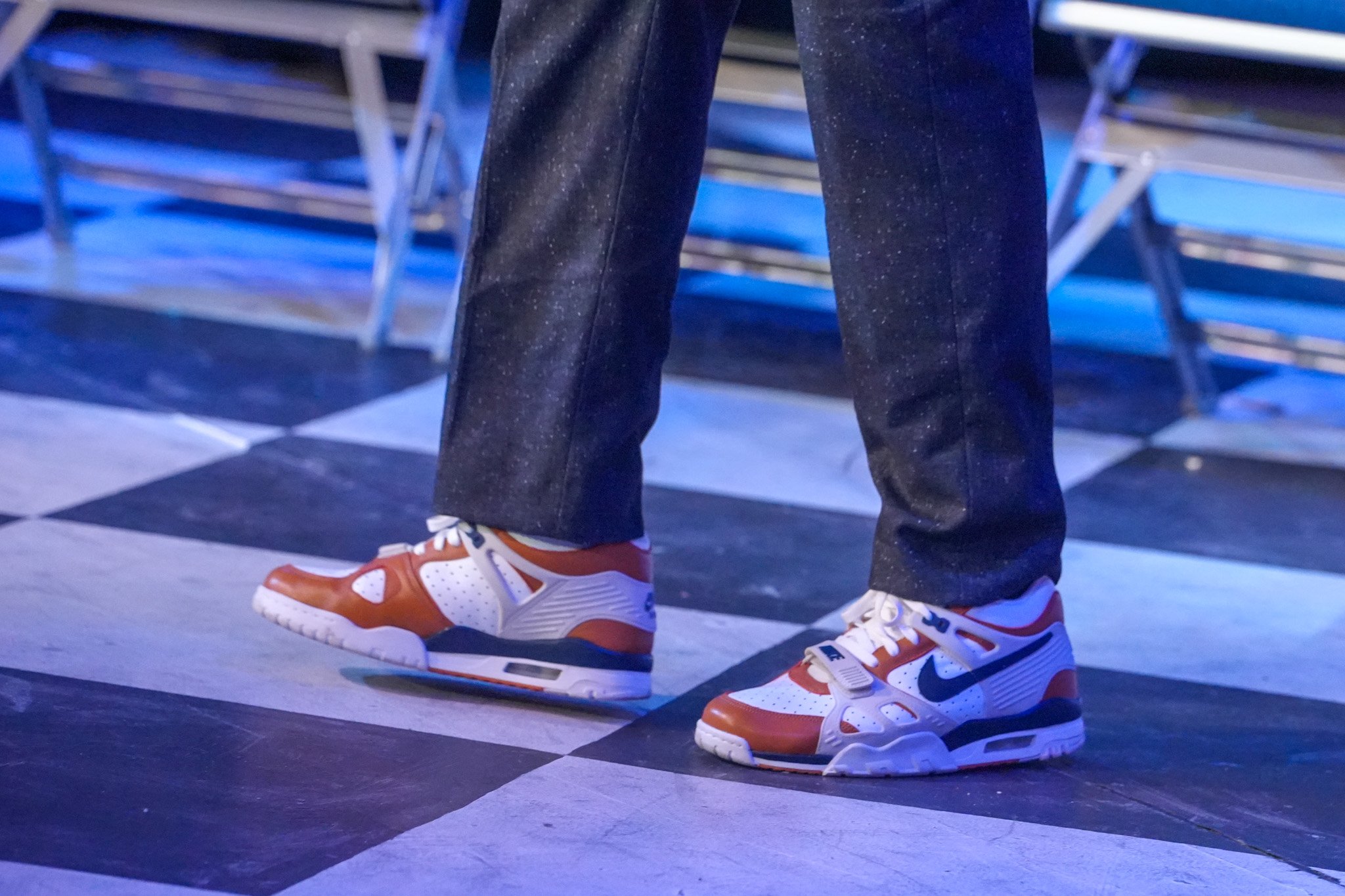
We learned about the intersection of commerce, entertainment, and cultural presence through Run-DMC’s groundbreaking partnership with Adidas. Craft described Adidas executives seeing thousands of fans at Madison Square Garden holding up their shell-toe sneakers during a performance of My Adidas, and how in that moment, Run-DMC changed marketing history and opened doors for future artists and cultural icons.
“Without Run-DMC,” Craft explained, “we don’t see Travis Scott… we don’t see Cardi B getting these deals.”
Charger Nation fed off of Craft’s energy, letting their love and knowledge shine. They answered pop quiz questions, defined sneaker culture terms, debated basketball greatness (Michael Jordan, PERIOD.), and most importantly, shared laughter and a sense of belonging.
Craft discussed culture itself in a way that resonated with the entire community. Culture isn’t abstract — it’s lived. It’s what we wear, how we express ourselves, how we resist, how we build community, and how we share ourselves. By the end of the talk, we weren’t just thinking about shoes differently; we were thinking about history, and the world around us, differently, as we always encourage each other to do in this community.

Black History Month is often about honoring the past. Craft’s visit reminded us that Black history is also present, evolving, and embedded in the everyday choices and cultural expressions around us. It is the past, and it is very much right now.
Through storytelling, humor, and deep historical knowledge, Craft Sutton gave us the ability to look at an everyday pair of shoes with a new perspective that encompasses global history, civil rights, hip-hop, entrepreneurship, and identity, all communicated through the language of sneakers. Whether it's finally owning your holy grail or simply admiring how others style their Pandas, sneakers are a part of our national culture.
As we move beyond February, I hope we all remember that Black History is all our history and that it is worth knowing and engaging with beyond the classroom settings. Many, if not all things we enjoy, incorporate Black culture in some aspect, and those connections significantly make our lives better and more joyous. As we continue to celebrate the diversity that makes our community so strong, remember our common ground. Like shoelaces, we are all intertwined.